







St. Patrick’s Day: History, Meaning, and How It’s Celebrated Around the World
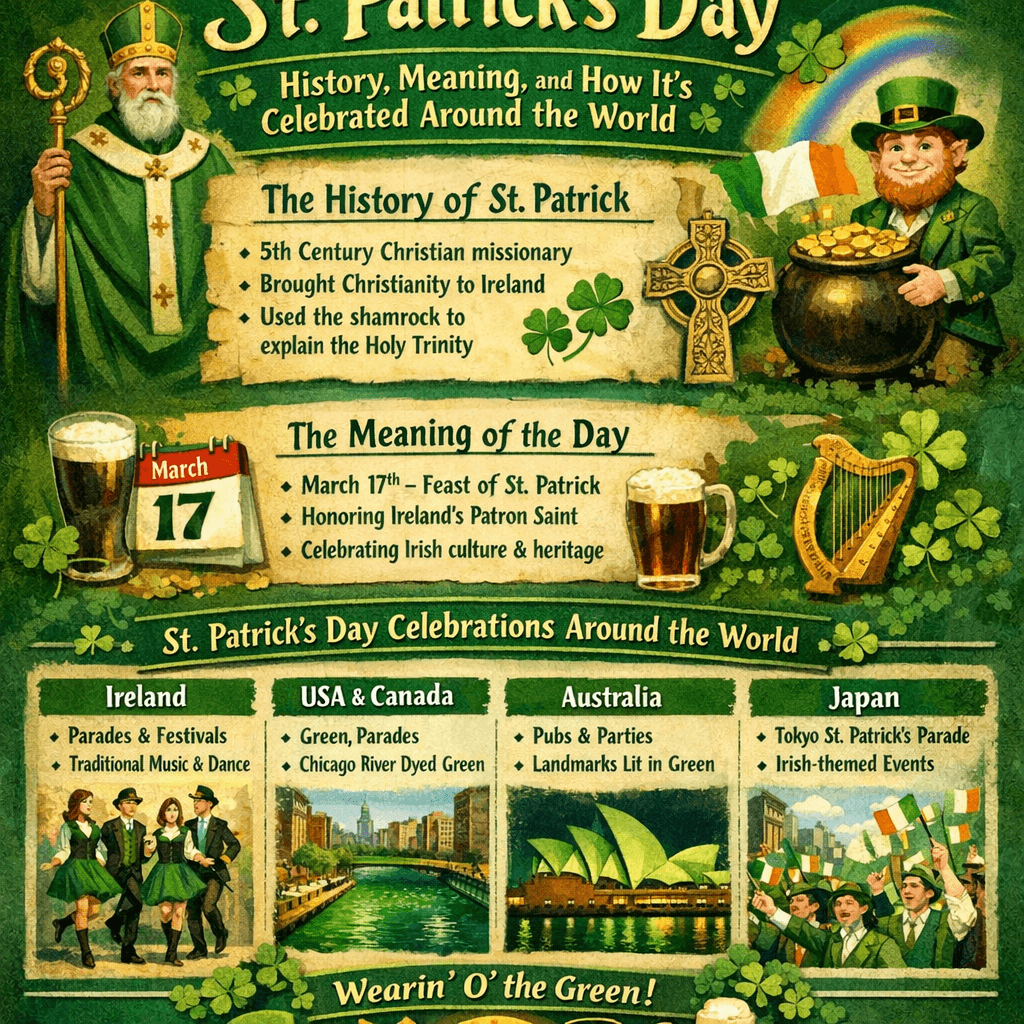
Every year on March 17, millions of people across the globe celebrate St. Patrick’s Day, a cultural and religious holiday honoring the patron saint of Ireland. What began as a religious feast day has evolved into an international celebration of Irish culture, traditions, music, food, and heritage.
Today, St. Patrick’s Day is known for parades, people wearing green clothing, festive gatherings, and iconic symbols like the shamrock. But behind the festivities lies a fascinating story about a missionary named Saint Patrick, whose life helped shape Irish history.
In this article, we’ll explore the history of St. Patrick’s Day, the life of Saint Patrick, popular traditions, and how the holiday is celebrated worldwide.

What Is St. Patrick’s Day?
St. Patrick’s Day is a cultural and religious holiday celebrated annually on March 17. It honors Saint Patrick, the patron saint of Ireland, who is credited with bringing Christianity to the Irish people during the 5th century.
Originally, the day was observed as a Christian feast commemorating Saint Patrick’s death. Over time, it evolved into a broader celebration of Irish culture and identity.
Today, St. Patrick’s Day is recognized worldwide and is particularly popular in countries with strong Irish heritage, including the following:
- Ireland
- United States
- Canada
- Australia
- United Kingdom
When Is St. Patrick’s Day Celebrated?
St. Patrick’s Day is celebrated every year on March 17. The date marks the traditional death anniversary of Saint Patrick, who died around the year 461 AD.
In Ireland, the day is a public holiday. Government offices, schools, and many businesses close so people can participate in celebrations and events.
Who Was Saint Patrick?
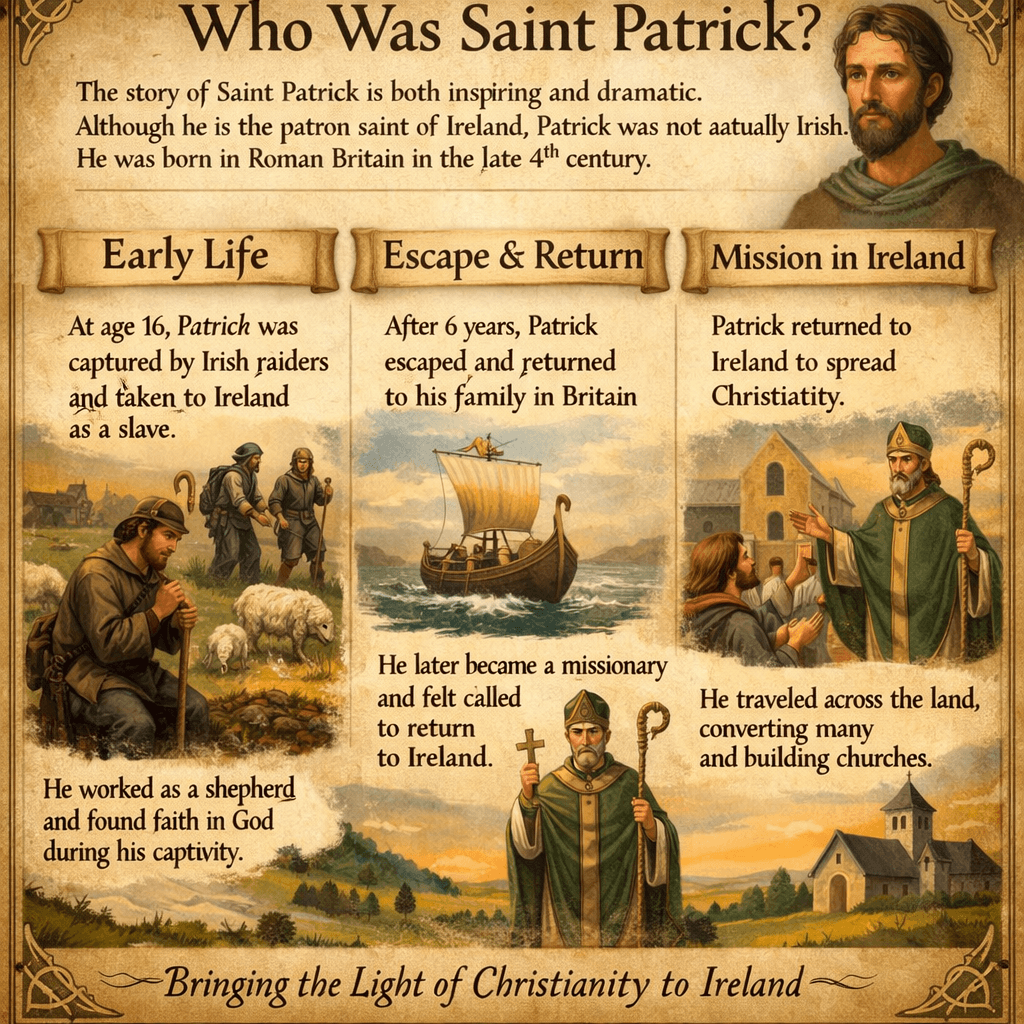
The story of Saint Patrick is both inspiring and dramatic.
Despite being Ireland’s patron saint, Patrick was not actually Irish. He was born in Roman Britain in the late 4th century.
Early Life
At the age of 16, Patrick was captured by Irish raiders and taken to Ireland as a slave. During his captivity, he worked as a shepherd and spent many years in isolation.
During this time, he developed a strong Christian faith.
Escape and Return
After six years, Patrick escaped slavery and returned to his family in Britain. Later, he became a Christian missionary and eventually returned to Ireland to spread Christianity.
Patrick spent decades traveling throughout Ireland, converting people to Christianity and establishing churches.
The History of St. Patrick’s Day
The earliest celebrations of St. Patrick’s Day began in Ireland as a religious feast day.
For centuries, the holiday was observed mainly through church services and family meals. Celebrations were modest compared to the lively festivals seen today.
Interestingly, the first large public St. Patrick’s Day parades actually took place in the United States, not Ireland.
Irish immigrants in American cities organized parades to celebrate their heritage and build community.
One of the most famous parades still takes place annually in New York City, attracting millions of spectators each year.
Why St. Patrick’s Day Is Celebrated
People celebrate St. Patrick’s Day for several reasons:
Honoring Saint Patrick
The day commemorates the life and legacy of Saint Patrick, who played a key role in spreading Christianity in Ireland.
Celebrating Irish Culture
The holiday is also a celebration of Irish heritage, traditions, and identity.
Cultural Unity
For many people with Irish ancestry, the day provides an opportunity to connect with their roots and share their culture with others.
St. Patrick’s Day Traditions
Over the years, several traditions have become closely associated with St. Patrick’s Day.
Wearing Green
One of the most recognizable traditions is wearing green clothing.
Green is associated with Ireland because of its lush landscapes and because it appears prominently in Irish national symbols.
Many people also wear green accessories such as hats, scarves, or shamrock pins.
Parades and Festivals
St. Patrick’s Day parades are held in many cities worldwide. These events typically include:
- marching bands
- dancers
- colorful floats
- traditional Irish music
Some of the largest celebrations take place in:
- Chicago
- Boston
- Dublin
Traditional Irish Food
Many people celebrate the holiday by enjoying traditional Irish dishes, including
- corned beef and cabbage
- Irish stew
- soda bread
These meals have become part of the cultural celebration, especially in Irish-American communities.
Popular Symbols of St. Patrick’s Day
Several symbols are commonly associated with the Day.
The Shamrock
The Shamrock, a small three-leaf clover, is one of the most famous symbols of the holiday.
According to legend, Saint Patrick used the shamrock to explain the concept of the Holy Trinity in Christianity.
Leprechauns
Another popular symbol is the Leprechaun, a mischievous fairy from Irish folklore. Leprechauns are often depicted as small men wearing green clothing and guarding pots of gold.
While they are not historically connected to Saint Patrick, they have become a fun part of modern celebrations.
The Color Green
Green represents Ireland’s nickname as the “Emerald Isle.”
On St. Patrick’s Day, landmarks and buildings around the world are often illuminated with green lights as part of the festivities.
How St. Patrick’s Day Is Celebrated Around the World
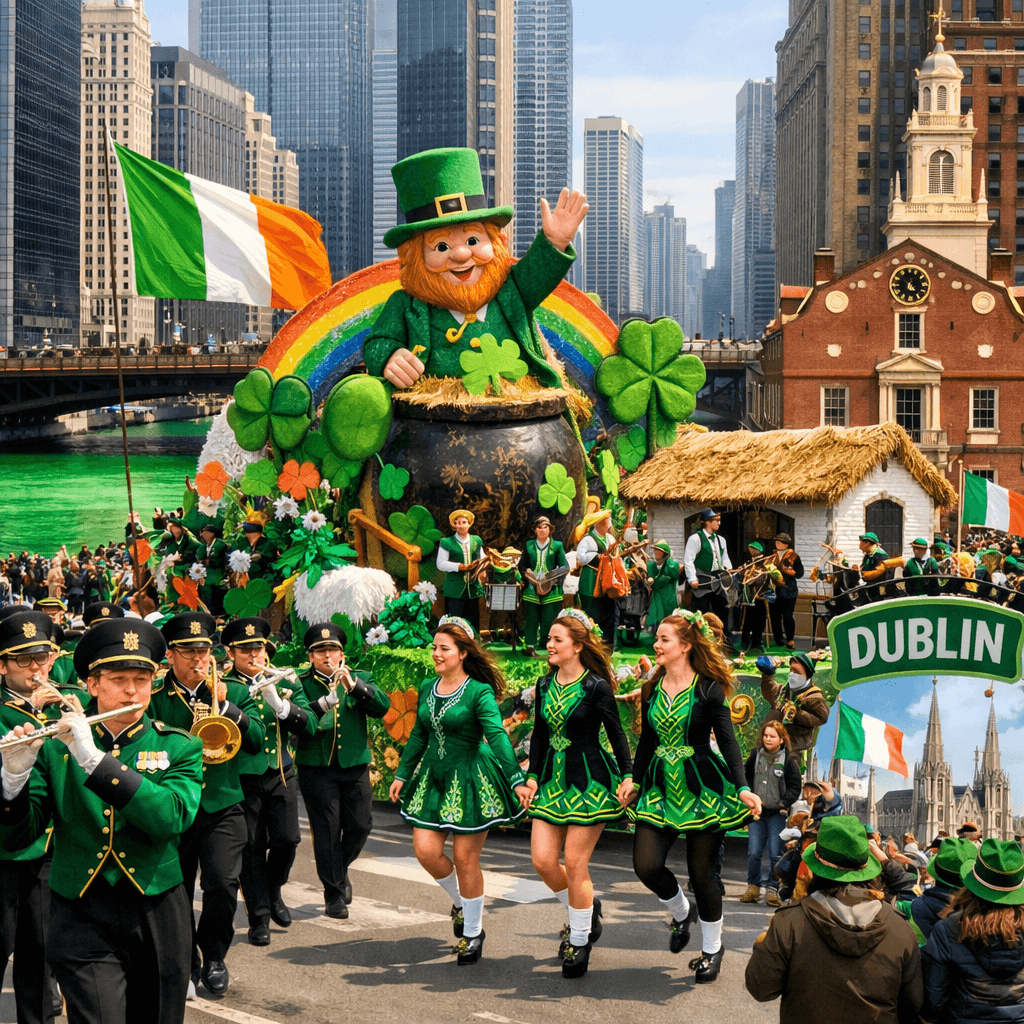
Although the holiday originated in Ireland, it is now celebrated globally.
Ireland
In Ireland, celebrations include large parades, music festivals, cultural performances, and family gatherings.
The capital city Dublin hosts a major multi-day festival attracting international visitors.
United States
The United States has some of the largest St. Patrick’s Day celebrations.
Cities such as New York City, Chicago, and Boston host massive parades and festivals.
In Chicago, the river is famously dyed green to celebrate the holiday.
Canada
Cities like Montreal hold one of the oldest St. Patrick’s Day parades in North America.
Australia
In Australia, celebrations include concerts, parades, and Irish-themed cultural events.
Interesting Facts About The Day
Here are some fascinating facts about St. Patrick’s Day:
- Saint Patrick was originally named Maewyn Succat.
- The shamrock became associated with Irish identity centuries after Patrick’s death.
- The first Day parade took place in the United States in the 18th century.
- Blue was originally associated with Saint Patrick before green became the dominant color.
- Over 13 million pints of beer are consumed globally on the holiday each year.
Why This Day Still Matters Today
In modern times, St. Patrick’s Day is more than just a festive occasion.
It represents:
- cultural pride
- heritage and identity
- the global influence of Irish culture
The holiday also brings communities together through music, food, and shared traditions.
For many people, it’s an opportunity to celebrate diversity and appreciate the cultural contributions of Irish immigrants around the world.
Frequently Asked Questions
What is St. Patrick’s Day?
This day is a holiday celebrated on March 17 honoring Saint Patrick and Irish culture.
Why do people wear green on this Day?
People wear green because it represents Ireland, known for its lush green landscapes and national identity.
Who was Saint Patrick?
He was a Christian missionary credited with bringing Christianity to Ireland during the 5th century.
What does the shamrock symbolize?
The Shamrock symbolizes the Holy Trinity and is associated with Irish heritage.
Is St. Patrick’s Day a public holiday?
Yes, it is a public holiday in Ireland and widely celebrated in many other countries.
Share this: